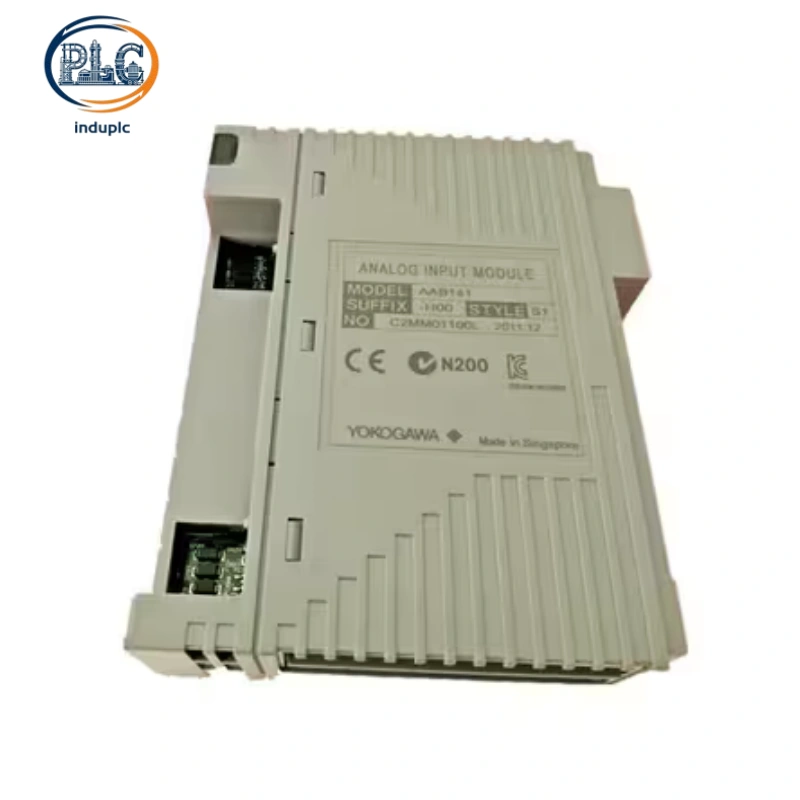
Yokogawa AAB141‑S00 Analog Input Module, 16-Channel 4-20mA/1-5V Non-Isolated FIO Card for CENTUM VP DCS
Product Description
Yokogawa AAB141‑S00 Analog Input Module, 16-Channel 4-20mA/1-5V Non-Isolated FIO Card for CENTUM VP DCS
Yokogawa AAB141‑S00 16-Channel Non-Isolated Analog Input FIO Module for CENTUM VP DCS Process Monitoring
1. Core Functional Advantages of Yokogawa AAB141‑S00
Universal Standard Analog Signal Compatibility
Yokogawa AAB141‑S00 adapts to two mainstream industrial analog signal types for universal field instrumentation docking. The module accepts 4-20mA current loop signals and 1-5V DC voltage signals from process transmitters. Unified signal support eliminates hardware replacement needs for mixed monitoring points on production sites.
High-Density 16-Channel Single-Slot Design
Yokogawa AAB141‑S00 integrates 16 independent sampling channels within one standard FIO slot. High-density channel layout optimizes cabinet space utilization for large-scale signal collection projects. Compact single-card structure reduces total hardware investment and rack occupancy for DCS I/O configurations.
2. Reliable Industrial Operational Performance
Stable Continuous Sampling Capacity
This FIO module maintains consistent signal conversion accuracy during long-cycle industrial operation. Standardized internal circuitry minimizes data deviation in steady-state process environments. Fixed sampling parameters ensure uniform data authenticity for daily plant monitoring and trend recording.
Qualified Harsh Environment Adaptability
Hardware components of Yokogawa AAB141‑S00 comply with industrial indoor operation standards. The unit tolerates regular temperature fluctuations and non-condensing humidity in control cabinet environments. Rigid module structure resists minor mechanical vibration from on-site equipment operation.
3. Seamless CENTUM VP DCS System Integration
Native FIO Backplane Compatibility
Yokogawa AAB141‑S00 matches standard FIO backplane specifications exclusive to CENTUM VP platforms. Direct plug-in installation achieves stable electrical connection and bus data handshake. No auxiliary adapters or firmware modifications are required for system docking.
Simplified On-Site Commissioning and Replacement
Standard FIO form factor supports fast module disassembly and installation. Pre-calibrated factory parameters cut on-site debugging workload significantly. Field teams complete system expansion and module replacement with minimal operational interruption.
4. Primary Industrial Application Scenarios
Mass Process Parameter Monitoring
This module suits large-scale collection of pressure, flow, level and temperature analog data. Multiple field transmitters connect to Yokogawa AAB141‑S00 for centralized signal aggregation. Collected data supports real-time DCS display and automatic process regulation.
Existing DCS System Expansion and Retrofit
Operational CENTUM VP plants adopt this module for incremental system upgrades. Consistent FIO hardware standards ensure compatibility with legacy cabinet layouts. Retrofit projects achieve functional expansion without overall system reconstruction.
General Process Automation Loop Control
Chemical, energy and manufacturing facilities deploy the unit for conventional monitoring loops. Stable signal output provides reliable data basis for alarm judgment and closed-loop control logic. The module supports 24/7 unattended operation of continuous production lines.
5. Key Reasons to Specify Yokogawa AAB141‑S00
Cost-Effective High-Density I/O Configuration
Sixteen-channel integration lowers per-point hardware costs compared with low-density I/O cards. Optimized cabinet layout reduces auxiliary accessories and space occupation. The module delivers balanced performance and cost for large-scale DCS I/O deployment.
Proven Platform Matching Stability
Purpose-built for Yokogawa CENTUM VP systems, the unit avoids protocol mismatch and communication faults. Unified factory calibration standards guarantee long-term operational stability. Mature hardware design reduces field failure rates and maintenance frequency.
Low Maintenance Operational Characteristics
Simplified internal circuit structure minimizes vulnerable components. Standard modular design simplifies daily inspection and fault troubleshooting. Long service life specifications lower long-term plant operational costs.